
Safety technology from LTA■
As an ideal complement to the first-class solutions for clean air, LTA is also in action worldwide for your safety. From fire protection dampers and fire alarm control panels to complete fire extinguishing systems, LTA systems already provide reliable protection in over 3,000 machine tools. And with official certification: The IBExU Institute for Safety Technology has tested and certified the LTA systems.
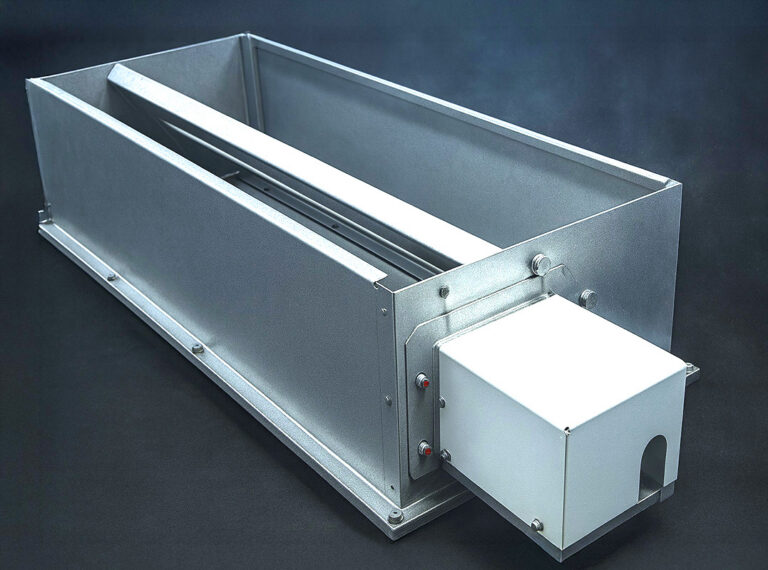
Pressure relief damper
The LTA pressure relief damper protects the machine housing from deformation, deflagration or fire due to increased internal pressure. If a defined overpressure occurs in the machine, the pressure relief damper opens. This releases an opening, and the overpressure can escape. As soon as this has happened, the pressure relief damper closes again automatically. This interrupts the air supply and usually extinguishes the fire as soon as it starts. In contrast to other systems, the damper can be used as often as required. The opening pressure can be defined exactly, and monitoring the damper position is easily possible. The opening pressure is 20 mbar.
Required parameters for dimensioning the pressure relief damper:
- Internal volume of the machine
- Maximum permissible pressure and maximum proportion of ignitable mixture in the machine interior
- Minimum opening pressure of the pressure relief damper
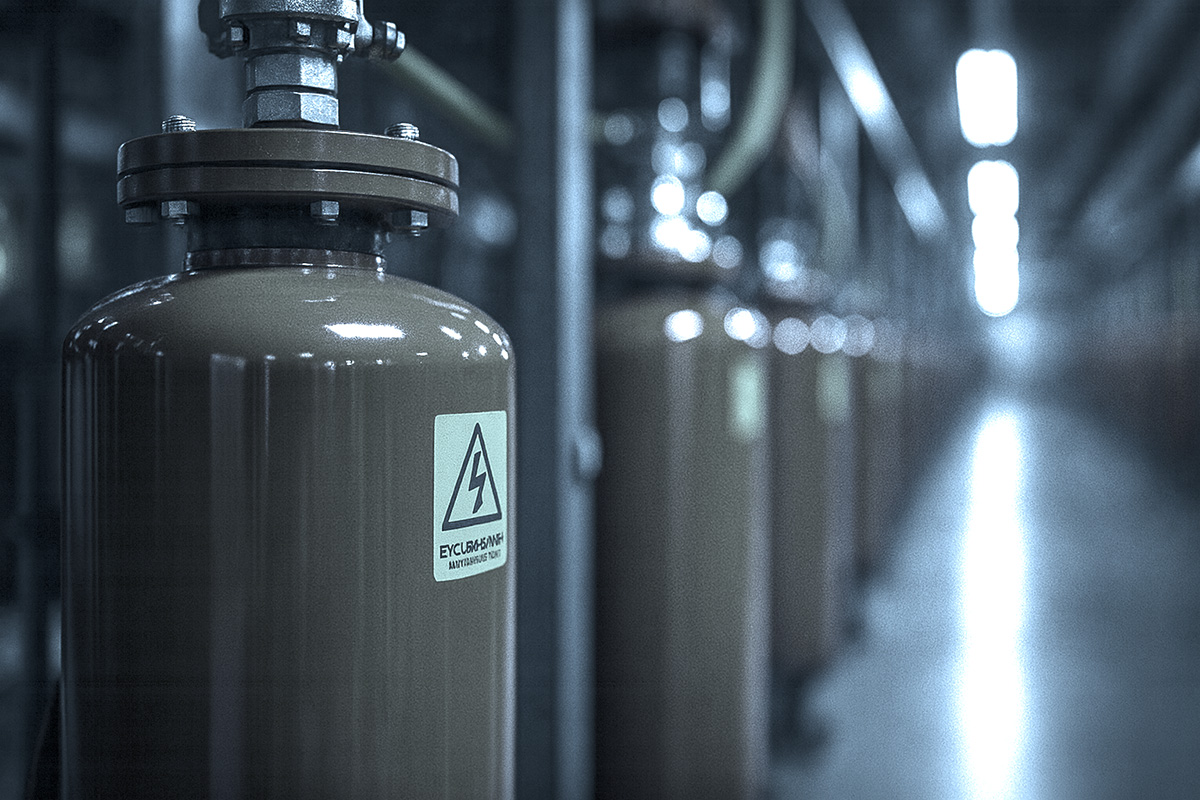
Fire Extinguishing System
Extinguishing systems are used to extinguish fires in machine hoods of machine tools. The selection of the extinguishing agent and the design of the extinguishing system are determined by the following criteria:
- Material
- Coolant lubricant
- Machine volume
- Tightness of the machine hood
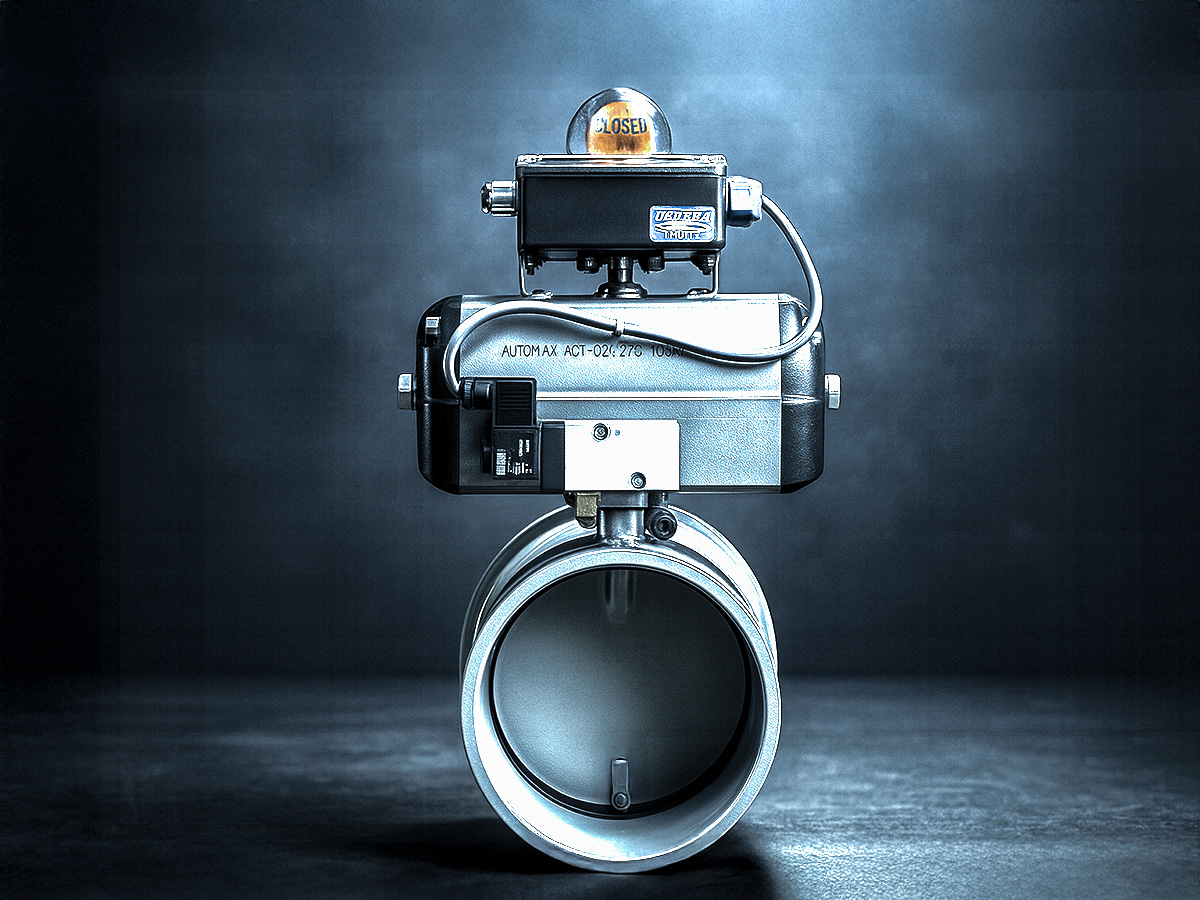
Air Shut-off Damper
The LTA air shut-off damper is used to interrupt the connection between the extraction system and the machine in the event of a fire or deflagration. The closing time of the shut-off damper is only 250 milliseconds. This prevents the fire from being stoked by fresh air drawn in and flames from jumping to the extraction system and the pipe systems.
Fire Protection Control Panel
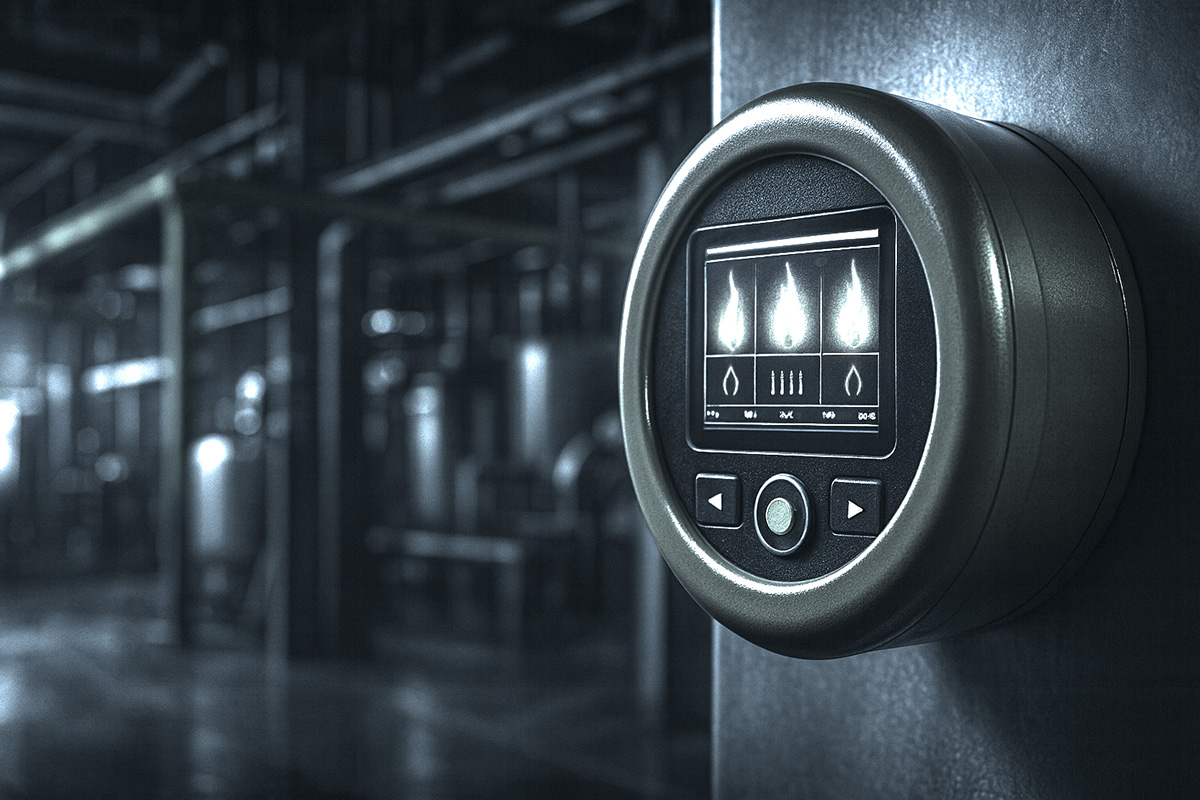
The fire protection control panel serves as the control unit for the safety systems of a machine tool and centrally controls the components such as sensors, position switches, other signal transmitters and the extinguishing system. The fire alarm control panel processes the input signals to the corresponding output signals, such as a message to the fire department, visual display or control of the fire protection damper. Together with our partners, we would be happy to offer you an individual fire extinguishing system concept.
Frequently Asked Questions about LTA Safety Technology
Explosion, detonation, deflagration. What do they mean?
Explosion is the umbrella term for detonation and deflagration. If the propagation occurs at supersonic speed, it is called a detonation. If, in turn, it is below the speed of sound, it is called a deflagration.
Instead of deflagration, the term ‘Verpuffung’ (deflagration) is often used, thus describing a less severe explosion.
Does a machine tool with oil cooling fall under the Atex directive?
According to expert opinion from the VDW, explosions in machine tools caused by cooling lubricants are always less severe and are therefore to be classified as deflagration. A machine tool therefore does not fall under the Atex directive with regard to cooling lubricants.
For absolute safety, however, it is always recommended to measure the concentrations of the flammable mass in a machine to ensure that the lower explosion limit (LEL) is safely maintained by a suitable extraction or ventilation system.
Is the safety concept eliminated when cooling with emulsion?
Only with a water content of > 80% can it be safely assumed that the cooling lubricant mist cannot ignite.
Which sensors are suitable for fire detection?
For use in monitoring fires caused by burning cooling lubricant, only UV sensors are suitable; IR sensors react to a different light spectrum. When installing such sensors in the machine hood, it is also recommended to flush the optics with purified compressed air and monitor the optics for contamination. If these options are not planned, an appropriate maintenance plan can be used as an alternative.
What are the components of a fire protection concept?
In addition to the design measures, fire-fighting and organizational measures are just as important in the overall concept.


